Keeping That Energy

“You don’t need to see the whole staircase, just take the first step.

Martin Luther King Jr.

Picture this:

You’re sitting at your desk, a heavy weight pressing down on your chest.
Work is piling up.
Deadlines long passed now glare like silent judges.
Projects you once poured your soul into lie half-finished.
Forms from home remain untouched.
Unread messages loom.
You’re sitting at your desk, a heavy weight pressing down on your chest.
Work is piling up.
Worse yet—messages read, but left on read, with no response sent.
… and what are you doing?

Staring into the abyss, waiting to see what stares back.
Not one spark of care for completion, even as the weight of it all becomes unbearable.
No vigour. No passion. Just stillness — stalled…
If that’s you…
You’re looking back at me from the other side of the abyss.

A couple of months ago, I wrote about the tug of war within — that ever-present battle between focus and distraction, between routine and passion.

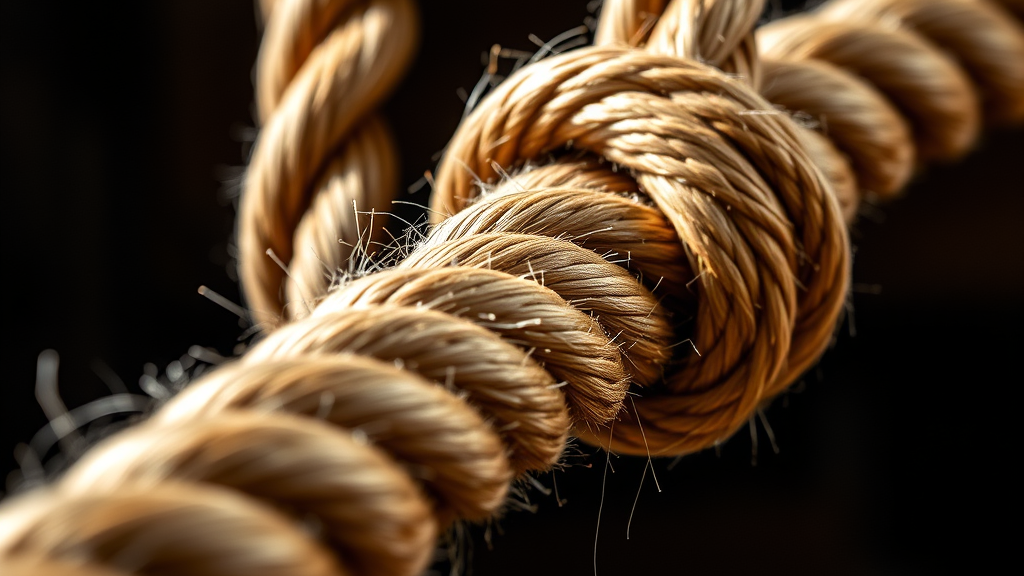
But what happens when the rope slips from your grasp?

What happens when the wheels fall off? When the momentum fades? When the spark that once fueled your creativity dims to embers? When waking up feels like lifting lead, and the idea of doing becomes too much?

Lately, I’ve found myself in that space — the grey zone between action and inertia. The tug-of-war hasn’t ended, but the tension’s gone. My passions — as many and varied as they are — begin to scatter like dry leaves in the wind.

People say, “You’re good at so many things!”
Inside, I echo back, “I can’t seem to finish any of them.”

It’s frustrating.
Deflating.
But strangely, it’s not all loss.

In the mess, I’ve started noticing something valuable — the fragments I leave behind often become tools for later. A half-finished script. A paused photo series. An interview waiting for the right time. These aren’t failures — they’re seeds. And sometimes, without warning, they bloom years later.

The days you are most uncomfortable are the days you learn the most about yourself.”

Mary l bean, writer

So, what do I do in the meantime?

I hold the line.

I call it bare minimum mode.
I do enough to keep the gears turning: a small edit here, a bit of work there. I focus on what’s necessary. I know I’ll fall behind — that’s part of it. But the new goal is simple: no breakdown.

That’s not to say the breakdown doesn’t hover nearby.
Some days teeter.
Days when everything feels on the brink of collapse. Days when I want to disappear — to hide under the weight of it all.

And when those days come, I let them.
I rest.
I walk.
I move my body and reconnect with the ground beneath me.
And then, eventually, I reset.

Lately, I’ve managed to sidestep those days — just barely. And for that, I’m grateful. Because as helpful as breakdowns can be for reflection, they drain me to the bone.

So instead, I take slow, measured steps — one at a time — away from the edge. One photo tagged. One email replied to. One task done.

The horizon will come.

The sky will clear.

The unfinished will shrink.

And eventually, the sun will rise again over a smaller mountain of to-dos.

Until then, I remind myself of just two things:

  • Don’t add more weight to the pile.
  • Finish what’s already there — piece by piece.

There’s no magic cure for this, not for me. No perfect structure, no flawless plan.

Only this:
A quiet resolve to keep moving.
A daily commitment to grow.
And a large glass of compassion poured generously — for myself and…

Maybe for you too.

“The cure for burnout is not ‘self-care’ but all of us caring for each other.”

Emily and Amelia Nagoski
Burnout: The Secret to Unlocking the Stress Cycle
The Enduring Voice of Cayman:

Honouring Oral History in the Wake of Loss

The tradition of oral history in the Cayman Islands wasn’t practised out of luxury or choice—it emerged out of necessity. For centuries, we’ve passed down our stories through spoken word, not because it was convenient, but because time and tragedy often stripped away every other way to preserve our past.

In 1785, a hurricane struck our islands with such force that a tidal wave levelled every single building—except Pedro’s Castle. That storm didn’t just flatten the landscape; it erased government documents, personal letters, photographs, and family homes. In its aftermath, the people of Cayman had to rebuild more than structures—they had to reconstruct memory.

“This hurricane was nothing compared to the 1785 one, which was so terrific in its force that it tore up all except one tree at South West Point. Every house except the stone house at Pedro was blown down. A tidal wave occurred, and after the recession of the tidal wave it was possible to walk on dry land from West Bay to South West Point. Many lives were lost—by falling trees, collapsing houses, and drowning. The number of vessels lost was unknown.”
An elderly man from North Side to Mr. J. S. Watler of Spotts, circa 1845

“Records of this hurricane I believe had been preserved, but were lost in later storms when houses blew down and papers were blown to the four points of the compass.”
— George S. S. Hirst

Notes on the History of the Cayman Islands by George S. S. Hirst

Time would prove this wasn’t a singular event. In 1932, the islands were battered again by what was then the most devastating hurricane on record. The losses were achingly familiar: lives, homes, photographs, letters—gone. And then again, in 1972, a fire consumed the government building that housed much of our national archive. Decades of history went up in smoke, and officials were left to gather the scraps of what remained.

Even in our recent history, we’ve known this pain. In 2004, Hurricane Ivan carved a brutal path across our islands. It destroyed not only physical infrastructure but also digital memories—computers, photographs, Nor’Wester magazines, issues of the Cayman Compass, and countless other records of who we are.

I often say our history has been washed away as frequently as the sand shifts with the sea—sometimes, quite literally. Yet from these repeated losses, Caymanians have learned a powerful truth: that memory must live in many forms—spoken, written, printed, recorded. Because at any moment, it can be taken from us.

One evening, in quiet conversation with a friend, he told me of his grandfather—a man who was blind, yet gifted with vision far beyond sight. Though unable to see, he painted entire worlds through his storytelling. He spoke of his childhood, of hardship, of a Cayman that now feels like a foreign country to us. I recognised that feeling. I too have sat with elders and listened to them speak of another Cayman—one so different, I sometimes wonder if it was the same land I now call home.

Another memory shared with me was of a time when there were few, if any, planes flying to Cayman. Back then, our food came in by ship. The seamen would blow their conch shell to announce their arrival, and my friend recalled how his mother would give him a few pence and send him down to the iron shore to fetch some fish.

He’d find the crew and say, “Boy, sir, I have no idea. My mummy gave me some money and I just want to get some fish for her.” These are the kinds of stories that live outside of textbooks—but they’re the soul of a nation.

That’s the beauty of oral tradition—you get to step into another time, another world, one you’ve never imagined, yet one that exists just beneath the surface of the present.

So when people tell me that Cayman has no culture, no tradition, no history, I cannot agree—nor can I stay silent. These comments come not from malice, but from a lack of access to the stories that define us. My hope is to close that gap. To bring people closer to the Cayman they never saw. The traditions we never knew. The culture that is still here—vibrant, layered, and resilient.

That’s why I created Soft Fresh Breeze—a project rooted in preservation and pride. I scan Nor’Wester magazines, old books, photographs. I digitise videotapes and camcorder footage. Each item I archive is a thread in the fabric of our identity.

Through Soft Fresh Breeze, I’ve shared adapted stories—narrated, retold, celebrated. But now, I’ve taken the next step.

Fly on the Wall being the evolution of that journey—and I’ve recently recorded my first episode.

It’s important to clarify that Fly on the Wall isn’t political in nature. It may feature individuals who have entered politics, but not because of their positions—instead, because of their passion. Because of the ways they’ve chosen to make a difference, using the tools and platforms available to them. Their stories are part of our national tapestry, too.

My first guest was Em DeCou. Sometimes, you don’t realise what—or who—will be the catalyst for your journey. When she announced her candidacy last November, I did some research and said to myself, This person is interesting. If not today, they’ll leave a lasting mark on this country—and for the better.

Of course, the universe rarely lets thoughts like that rest quietly. It moved. We met—by chance, or maybe fate—and when I asked her to be my first guest, she didn’t hesitate.

Her openness, her willingness, and her trust gave me the gift of a beginning. I’ll always be grateful to her for that. Together, we captured a piece of the essence of one young Caymanian. And I hope to do the same with many more—young and old.

If you know someone whose story deserves to be told, I will do everything in my power to make it happen. This is important to me—not because I’m a generational Caymanian (because I’m not), but because I am Caymanian. This is the only home I’ve ever known, and through these stories, I’ve come to know it more deeply than ever before.

Our younger generations won’t consume history the way we once did. They may not read bound books or tune into radio broadcasts. Today, it’s podcasts, YouTube, and digital content that carry the most reach. And so, I will meet them there—with stories worth hearing.

I hope you’ll support this effort. If you know someone with a story to tell—or if it’s you—please don’t hesitate to message or email me. I would be honoured to help you share it.

Because every voice matters. And every story deserves to live on.

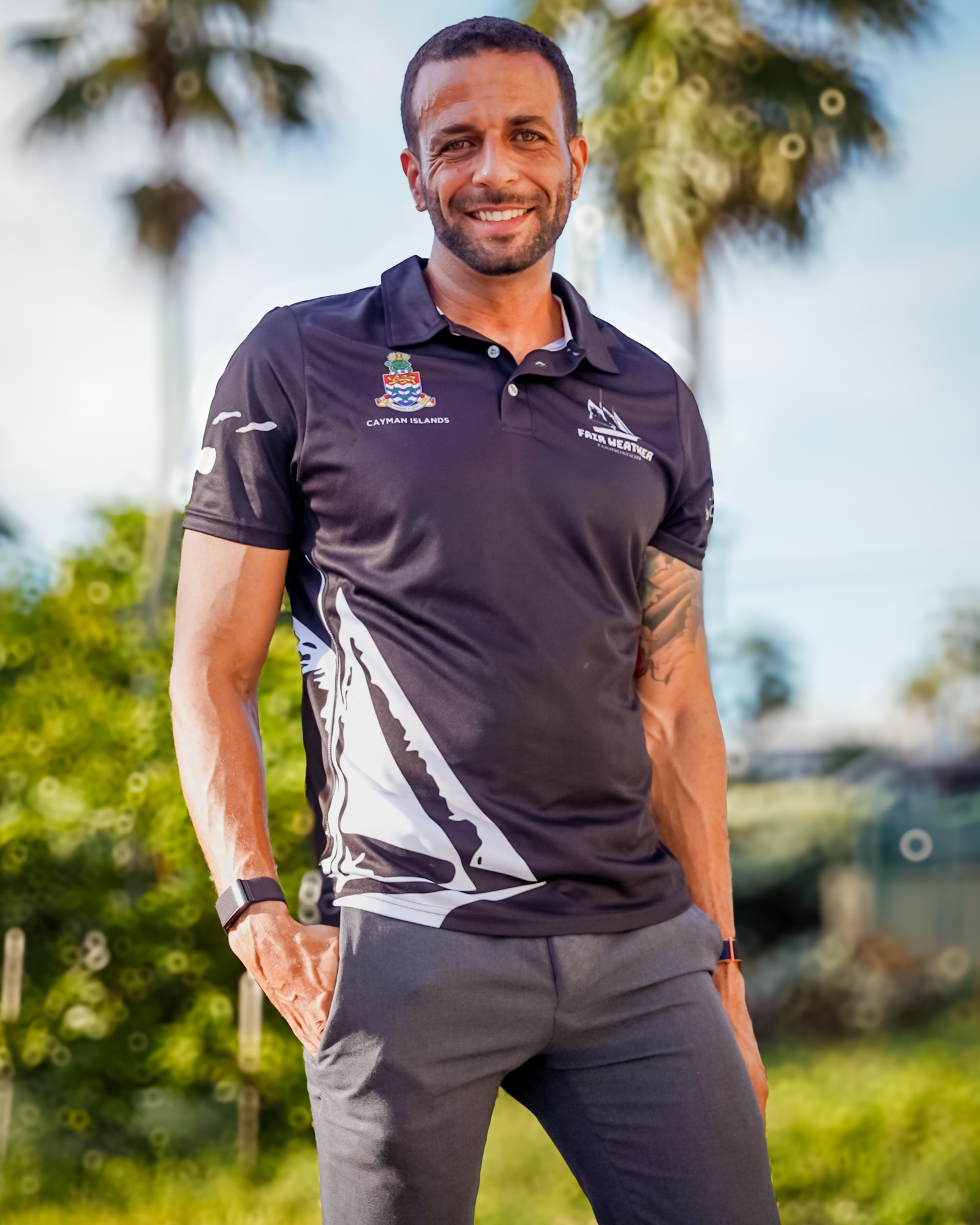
Capturing moments – One Frame at a Time

Matt Fox Seales

The Tug-of-War Within:

ADHD, Routines, and Reclaiming Control

“It is not the strongest of the species that survive, nor the most intelligent, but the one most responsive to change.”

– Charles Darwin

Over the past four weeks, I’ve committed one of the most ‘heinous’ crimes I could imagine: I’ve broken my routine. Since then, I’ve felt like I’m unraveling at the seams. The familiar stability I once had has slipped through my fingers, and it’s left me feeling disoriented, depressed, and, quite frankly, annoyed at myself. I’ve lost my sense of purpose, my drive, and it’s shown in the setbacks I’ve faced. I feel as if I’ve let myself down and deviated from the plan I worked so hard to build.

Have you ever struggled to build a routine that allows you to stay disciplined and structured? For me, it’s been a lifelong challenge. I was undiagnosed with ADHD for over 30 years (I’m only 38), and for most of that time, I didn’t understand why I didn’t think or act the same way others did. I knew something was different about me. The way I learned was not conventional, and what seemed easy for everyone else felt incredibly hard for me. It led to feelings of inadequacy and left me wondering what was wrong with me.

As I grew older, I came to realise that it wasn’t about something being “wrong” with me—it was that I simply didn’t fit into the box that worked for the majority. Now that I understand ADHD, I know how to address the challenges it brings.

After my diagnosis, I tried various medications, from Adderall to Ritalin, before finding Vyvanse. But I soon realised that medication alone wasn’t the solution. To truly manage ADHD, I had to create a routine that would provide the structure I needed. In 2023, following a health scare, I took the opportunity to make significant changes. I cut back on sugary foods and started going to the gym early in the morning, at 4:30 AM. This was the beginning of my transformation, and since then, I’ve worked hard to build a routine that works for me.

My Routine

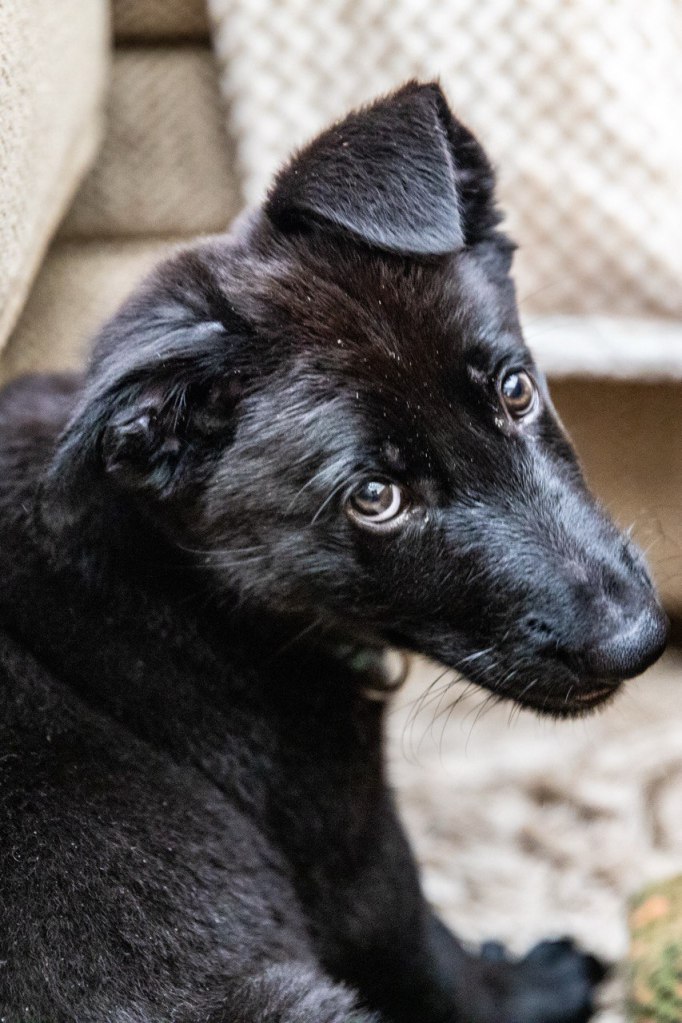
As I wake up at 4:30 AM, the first thing I feel is the cold, wet nose of my 5-year-old German Shepherd, Revy, nudging me, followed by a shake of her head as she seeks my attention.

Her eyes meet mine, filled with that eager look, and I’m reminded that my day has already begun, even before my feet hit the floor.

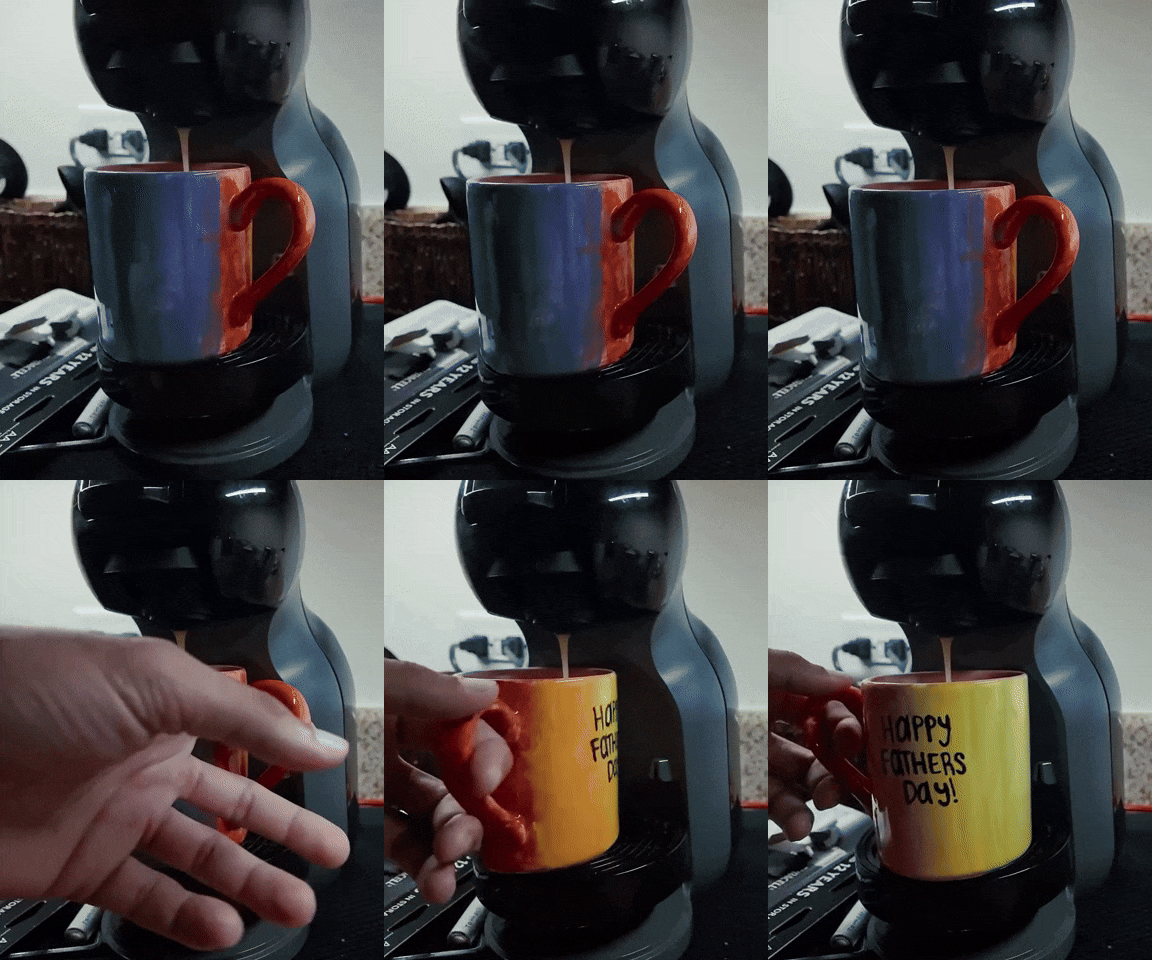
I stumble into the kitchen, grab the coffee grounds, scoop them with care, and begin to brew my precious cup.

The sound of the coffee brewing is a comforting ritual, marking the start of my day, even though the sun hasn’t yet risen.

Once my coffee is ready, I take my medication and go through my morning rituals. I let my dog outside, change into gym clothes, drink a full glass of water, and head out. By 5:00 AM, I’m at the gym for an hour, getting my body and mind in gear for the day ahead.

I return home between 5:45 and 5:50 AM, giving me just enough time to attend to any projects I’m working on before the day fully kicks off. By 6:00 AM, the sound of the shower turning on signals that my daughter is getting ready for school. My youngest daughter asks, “Daddy, where’s my chocolate milk?” and Revy nudges me again, seeking her breakfast. It’s a familiar, comforting chaos that reminds me the day is already in full swing.

The Struggles

It’s frustrating and disheartening. People often don’t understand the internal battle those of us with ADHD face.

Where the world often has me pulled in ten different directions—whether it’s photography, creative writing, filmography, scanning through magazines, spending time with my children, focusing on work, or tackling my studies—I find myself struggling with ADHD, which often causes me to avoid everything I’m supposed to be doing. Instead, I get drawn to entirely new tasks, leaving the ones I should focus on behind.

It’s frustrating and disheartening. People often don’t understand the internal battle those of us with ADHD face. It can be difficult to explain that it’s not laziness or lack of interest, but rather a constant internal struggle to maintain focus and attention. It can make progress feel like an uphill battle, especially when you’re trying to juggle so many things at once.

I feel this weight often, like a lump in my chest. It’s not a literal pain, but it’s that sensation of having missed something important—like an assignment forgotten, or a commitment unfulfilled. It’s overwhelming. I want to scream, cry, or curl up in a ball to escape it. But at the same time, I know I’m not failing. I’m still succeeding in many ways, despite the chaos and the mental tug-of-war. This sensation, though, still lingers as a reminder of the constant balancing act I’m navigating.

A Plan for Moving Forward

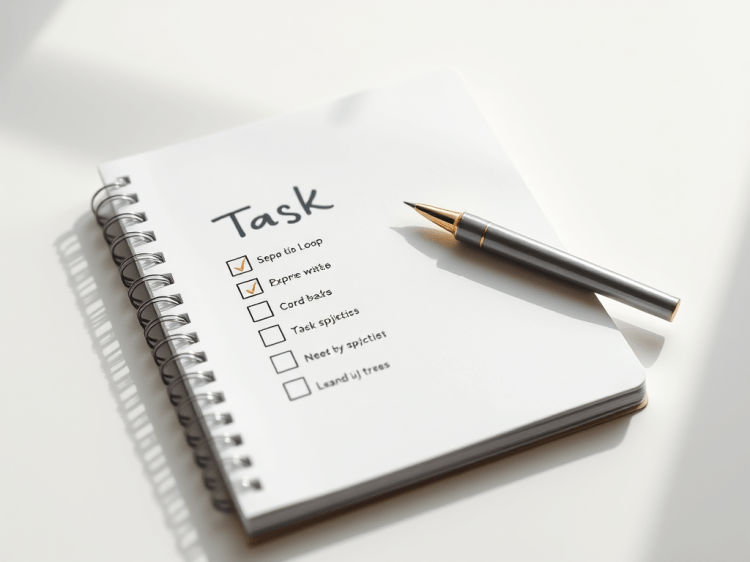
I recognise that no plan is foolproof and that I can’t expect to be perfect every day. I need to allow myself room to breathe. Over the past few weeks, I’ve tried creating detailed task lists and journaling before bed to help me unwind. Some methods have worked better than others, but it’s the process of experimentation that keeps me moving forward.

I’ve realised that the key is to make small adjustments and not get discouraged if something doesn’t work immediately. It’s about building consistency, even if it takes time.

I’m also learning to ease back into my successful routines, rather than rushing to force them back. Little by little, I’m reintroducing the elements that worked for me—like going to the gym early, reducing sugar intake, and prioritising sleep.

The process of experimentation helps me avoid burnout. It also helps prevent me from losing interest altogether in one area. Trying new things makes the routine feel fresh and manageable.

Moving Forward

The road ahead may not be easy, but I’ve learned that small, consistent adjustments can make a big difference. Progress isn’t about perfection—it’s about moving forward, one day at a time.

As I continue to develop, refine, and improve my own daily structures, I’d be interested in hearing how you stay grounded and balanced amidst the chaos of life.

What challenges have you faced, and what strategies have worked (or not worked) for you?

I’m always open to learning from others, because it’s in sharing our experiences that we truly grow. After all, it takes a village.

“The unexamined life is not worth living.”

– Socrates

One response to “The Tug-of-War Within:”

  1. […] couple of months ago, I wrote about the tug of war within — that ever-present battle between focus and distraction, between routine and […]

    Like

Leave a comment

Rediscovering Photography: A Journey Through Art, Burnout, and Renewal

Where Did I Go? What Did I Do?

Reflecting on my time away from photography, I often wonder: Did stepping back make me a better photographer? Did I discover new ways to express myself in its absence?

The answer is an emphatic yes.

During the COVID-19 period, many people found themselves with disposable income, and I was fortunate to own a Canon 5D Mark IV, an exceptional camera. I had an array of lenses—everything I needed to capture stunning images. Yet, despite having all the necessary tools, I had somehow lost the joy of looking through the lens. Spending so much time at home, watching my camera collect dust, I decided to sell it. I reasoned that I could always pick up another hobby or return to photography when the time felt right. Either way, I wasn’t using it—I had lost a part of the love I once had for it.

My last photo taken that I can recall of, with my Canon

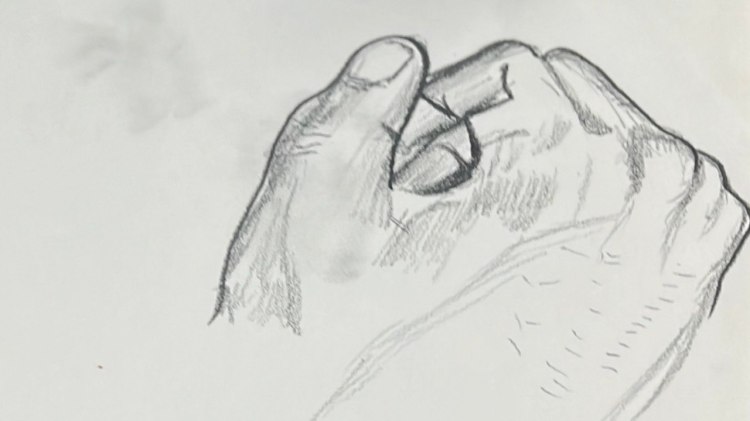
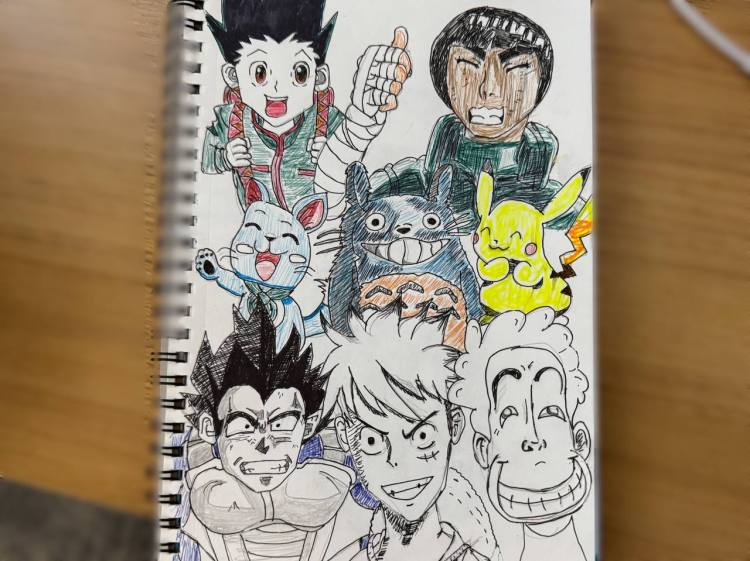
As time passed, I still felt the urge to capture life’s fleeting moments, but my camera remained absent. Instead, I relied on my phone for photography. Along the way, I picked up drawing. While I’ll never be a Picasso or Michelangelo, I found immense satisfaction in using my hands to create something—whether a faithful representation or an abstract interpretation of my subject.

Some of my fondest memories of artistic exploration stem from the holidays when my mother would visit. She often brought small art kits—paint-by-number sets with tiny palettes of ink. I would spend hours immersed in them. I recall a trip to Cayman Kai, where I brought along paint sets and canvases, turning art into a family affair. Those moments ignited a creative spark that extended beyond photography.

Drawn with Pen and Sharpie in 2020
Drawn 2022, a hand
2025 Anime Characters, Happy

During this time, I also started another business, where I rediscovered my passion for graphic design. Designing flyers daily for events reconnected me with a craft I had almost forgotten.

“A jack of all trades is a master of none, but oftentimes better than master of one.”

I often describe myself as a jack of all trades, and while the saying goes, “A jack of all trades is a master of none,” I prefer the complete version: “A jack of all trades is a master of none, but oftentimes better than master of one.” I embrace the pursuit of multiple passions, not to master them all, but to continuously evolve as an individual. During my time away from photography, I developed a new appreciation for the arts. Studying colors in the sky, patterns in nature, and the way leading lines shaped compositions—these elements began calling to me once again, urging me to capture them through a lens.

After exploring different forms of art—drawing, painting, and graphic design—I returned to photography in 2023. I can’t say definitively that I’m better than before, nor that I would have progressed more had I never stepped away. However, I can say with certainty that my perspective has changed. My eye has sharpened, my vision refined, and with age and experience, I have grown as a photographer.

Even during my hiatus, photography never truly left me. I spent time digitizing and restoring old family photos, recoloring them, and breathing life into faded memories. Perhaps it was this process—realizing the significance of preserving both mundane and momentous moments—that drew me back. It reminded me that photography is more than just capturing an image; it’s about telling a story and preserving history. During this time, I also restructured my Instagram, but one thing remained unchanged: my bio, which still reads, “Out doing what I love.”

One of the greatest lessons I’ve learned is that if a hobby starts feeling like an obligation—if you find yourself merely going through the motions without passion or emotional connection—taking a break can be the best thing you do. Burnout is real, and sometimes stepping away allows you to return with a renewed sense of purpose. Whether it makes you better or simply reaffirms your love for it, time away is never wasted.

“Out doing what I love.” @FoxSeales

Life is meant to be enjoyed, and hobbies should enrich that experience. If you choose to turn a passion into a full-time career, it’s essential to consider how that transition will impact your relationship with it. The shift from hobby to profession can either deepen your love or change it entirely. Whichever path you choose, pursue it fully, but never lose sight of the joy it brings you.

As for my photography today, I now shoot with a Sony A7C, primarily using a Sony 24-70mm F2.8 GM II lens. I also rotate with a 35mm F1.8 for paired with an adapter macro shots and generally to challenge myself creatively. I hope to add a long-range lens to my collection soon, but as many who know me would expect, I’ve also begun delving into videography and film. This, of course, means splitting my time, focus, and resources, but I embrace the challenge.

In a future post, I’ll share more about my film process and the various projects that help me balance my artistic passions—ensuring that photography always remains close to my heart.

One Frame at a time

Matt

The Journey Back to Photography

I don’t expect the phone to start ringing—at least, not just yet.

Photography has been a part of my life for as long as I can remember. For the past 23 years, I’ve been in love with it—sometimes actively, sometimes from a quiet distance. My first formal step into the world of photography was at 19 years old, when I took a course run by the National Gallery. It was taught by Art Pasquali, a well-known fashion photographer who had shot the likes of Cameron Diaz and other models. That experience left an imprint on me, but my journey had already begun long before.

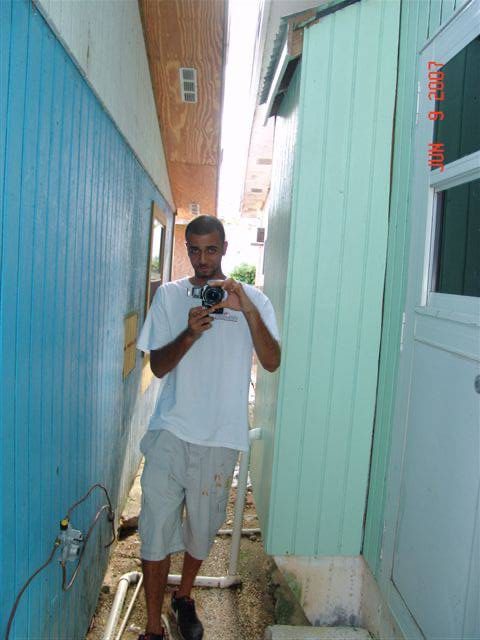
Person between two walls with a camera

Growing up, I worked as a sports journalist at my father’s newspaper company. It was inevitable that when the opportunity arose to buy my own camera, I jumped at it. I took up extra work at my aunt’s print and signage company, Quick Images, after college in the afternoons, saving every bit I could to afford my first DSLR—the Canon Rebel XT… I remember eating cups of rice with Oxtail Gravy for CI $1.50 to maximise how much I saved.

But even before that, I had been capturing moments. I had a collection of images taken with small Canon point-and-shoot cameras, and even earlier, photos of myself as a child, wielding a camera and snapping shots of anything that caught my eye.

Beyond that single course with Art, I have no formal education in photography or art. But that has never stopped me from doing what I love—taking pictures of things that intrigue me, that spark curiosity, that tell a story only I might see. And perhaps that’s where my journey took an unexpected turn. Because I shot primarily for myself, many of my photos remained unseen, unrecognised, gathering digital dust on hard drives.

Over time, life took over. I stopped shooting altogether. I even sold my cameras, convinced that chapter had closed.

But passion has a way of finding its way back.

In 2023, I rekindled my love for photography, making a bold switch—selling all my Canon gear (save for a couple of tripods) and stepping into a new era with my first Sony camera. It felt like a fresh start, a new training sequence in my ongoing story.

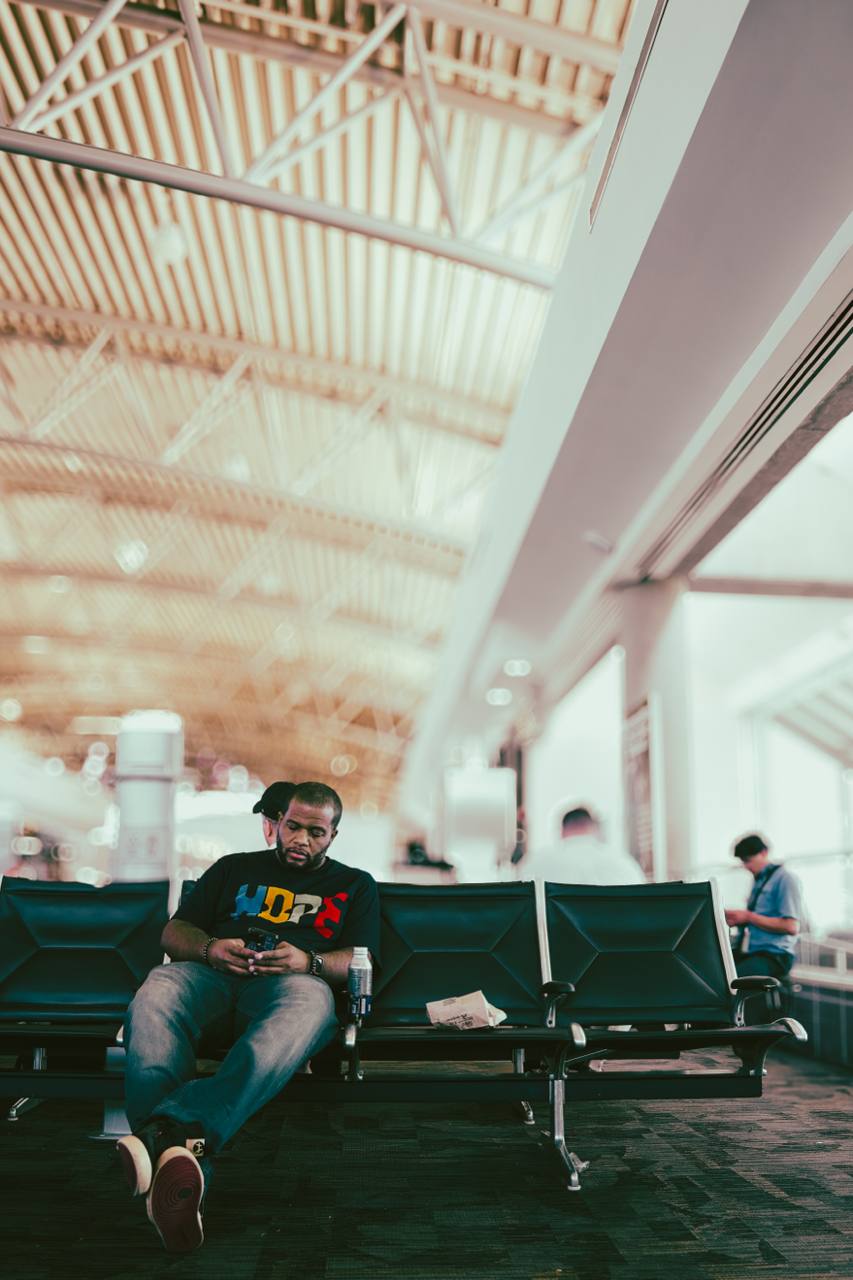
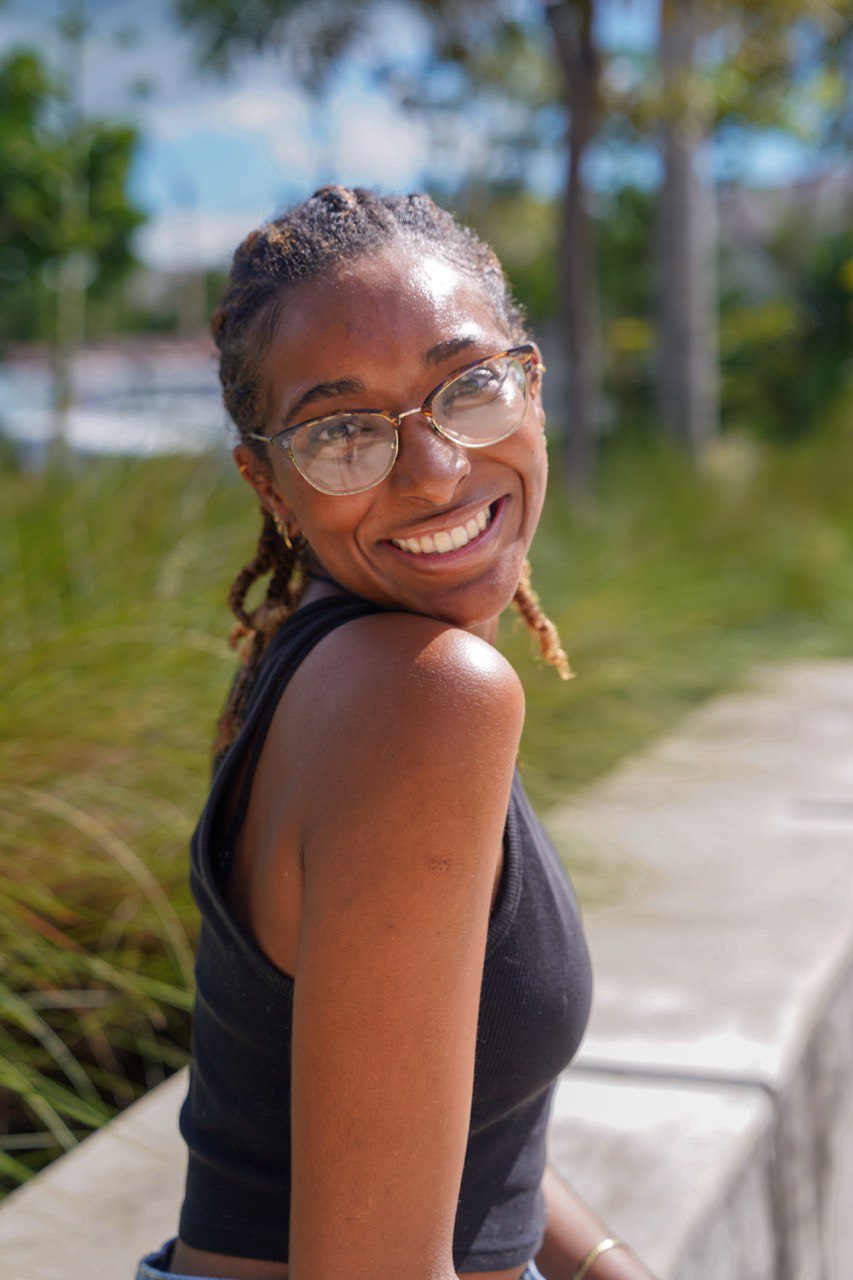
I’ve never been drawn to photographing people. It’s not that I can’t—I just find it awkward. Directing someone, telling them how to pose, where to look, how to tilt their head—it never felt natural to me. My photography has always been about capturing what exists organically, rather than staging a moment. And yet, recently, something inside me has shifted.

“Photography is limitless. It’s the art of distilling a story into a single frame.”

Maybe it’s a newfound curiosity. A desire to step outside my comfort zone. A growing appreciation for the depth of human expression—the smiles, the energy, the unguarded moments. Maybe, deep down, I do want my work to be seen, to be recognised in some way.

Photography is limitless. It’s the art of distilling a story into a single frame. Unlike film, where time and motion weave the narrative, photography demands that you capture everything—the emotion, the light, the atmosphere—in a fraction of a second. That’s what I adore about it. That’s what I want to master.

So, as part of this journey, I’m pushing myself to explore new terrain. To embrace the challenge of photographing people, to capture their moments as I would a landscape, a shadow, a fleeting light. Maybe one day, someone will look for my work the way they do the greats of the industry.

But beyond that, this is about growth. About breaking my own barriers. About experiencing photography in ways I never have before.

One frame at a time.

~Matt Fox Seales